Passage
The Lab, solo 2026
Curated by Margaret Cappock
Siobhan McDonald’s multifaceted exhibition Passage explores Dublin’s deep history as a mutable landscape shaped by water, cosmology, and human intervention. This deep material exploration through geological time, reveals the wetland as a place of erosion and growth, collapse and resilience. These threshold spaces of transformation move through liminal zones of submerged landscapes, where land and water continuously reshape one another. The work calls to mind ancient myths surrounding the rivers and seas as well their raw and fragile beauty.
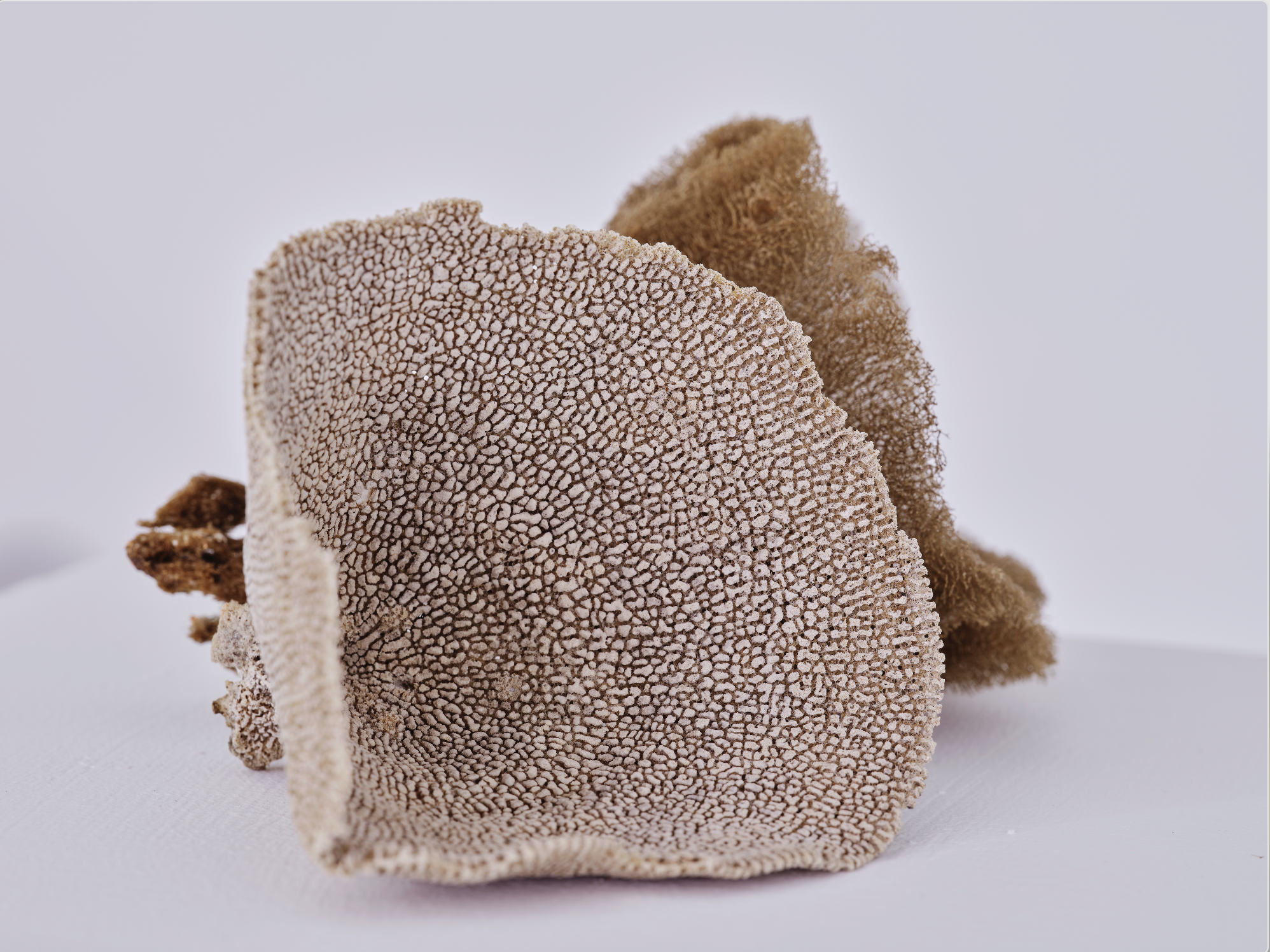
“LUNGS” Lungs | Inhale, Exhale (2025) 2 cm x 10 cm each, Porous layers of calcium carbonate and sea ponge, Photo: Ros Kavanagh
PASSAGE 15 Jan, 2026 – 23 Feb, 2026
Through film, sound, painting, and sculpture, Passage explores how the city’s shifting ground holds memory and resilience. Some of the works use the language of sound to connect with the histories and inaudible forces within our waterways that vibrate with non-human songs beyond our hearing range, bringing to life the invisible layers that carry the energies of our coastal zones.
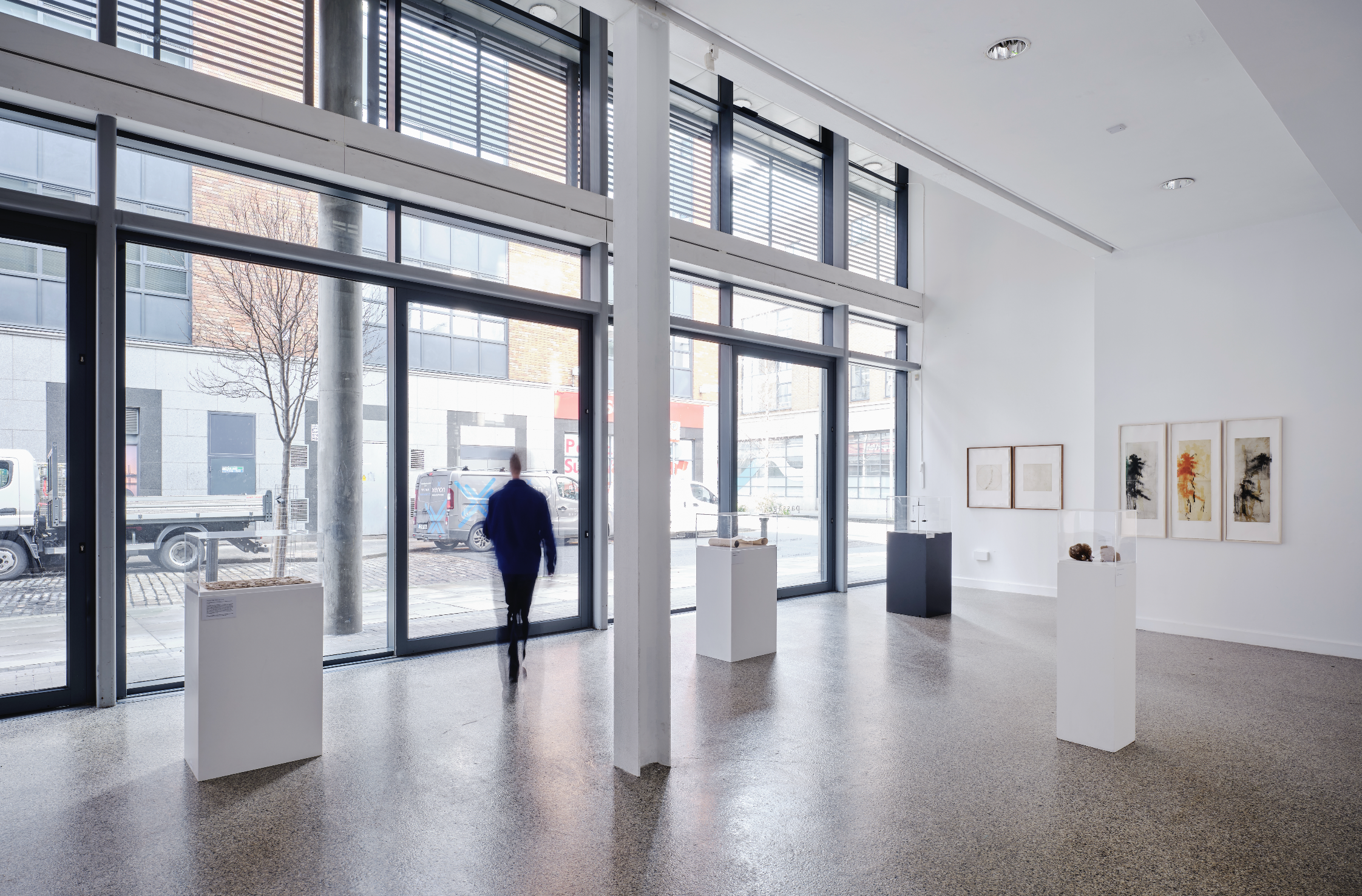
PASSAGE (2026), Siobhan McDonald, Installation view: The Lab, Dublin, 2026, Photo: Ros Kavanagh
Composed of painting and drawings using various techniques Chine Collé and frottage. The mixed media artwork, printed on delicate Japanese paper, responds to the different stages of the life cycle of the common pine tree and its merging into the soil of a wetland. It expresses the slow changes and communication of forest elements such as trees with other life forms.
Photo: Ros Kavanagh
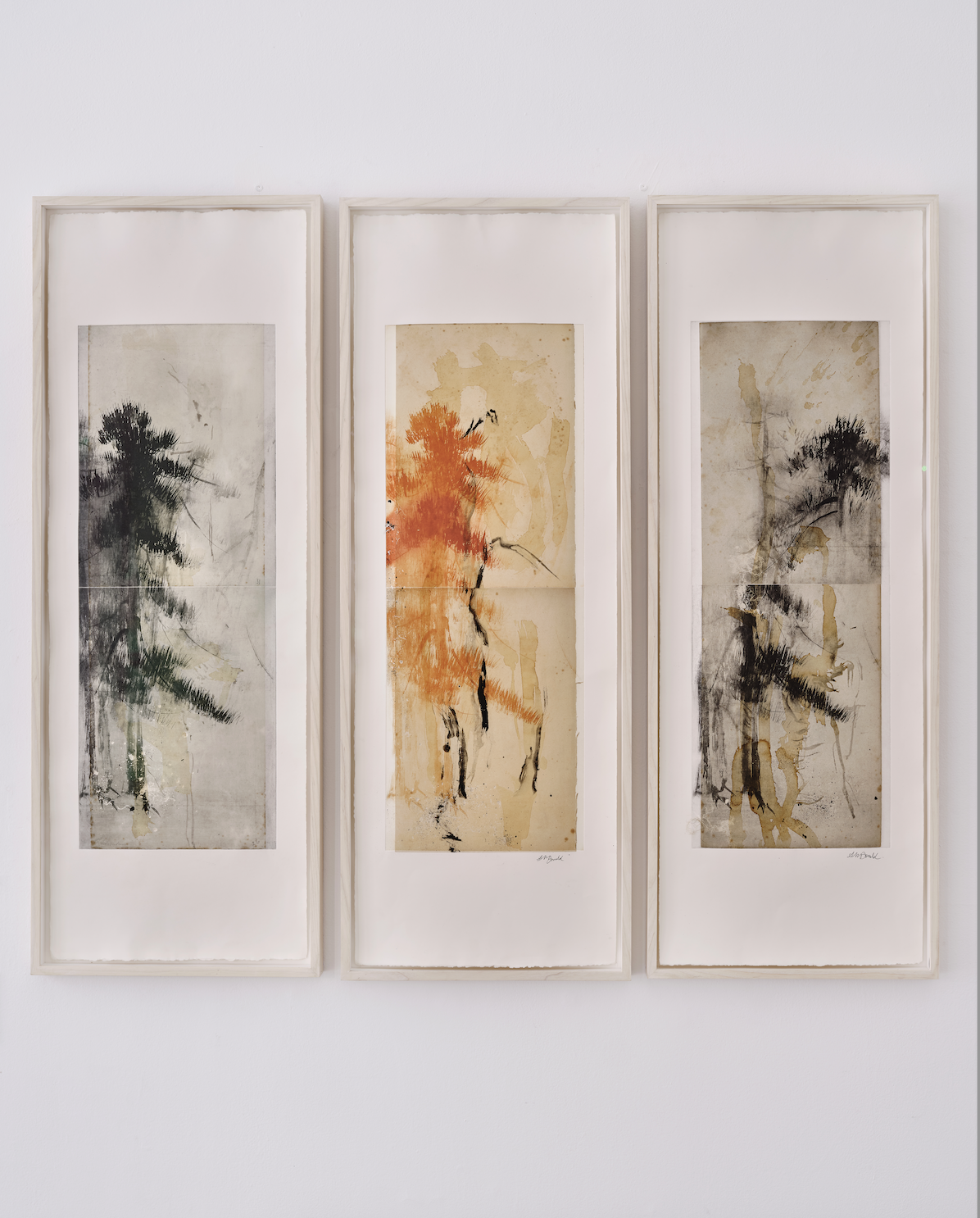
To Breathe a Forest (2024) Materials: Peat, moss, sediment, charcoal, roots on delicate layers of Japanese paper.
The film Passage (2026) lies at the heart of the exhibition and is the work from which the exhibition takes its title. The choice of the word ‘Passage’ is apposite as it allows for a multi-layered interpretation, particularly in an Irish context, because as an island nation, passage in and out of Ireland through sea journeys were an intrinsic part of our history. Yet the word also evokes archaeological undertones such as passage tombs, the burial tombs of the neolithic era or the ritual deposition of burning boats in bronze age Ireland. The sense of uncovering something buried is fitting in the context of the nature of McDonald’s art.
Read more: https://www.interaliamag.org/articles/siobhan-mcdonald-passage/
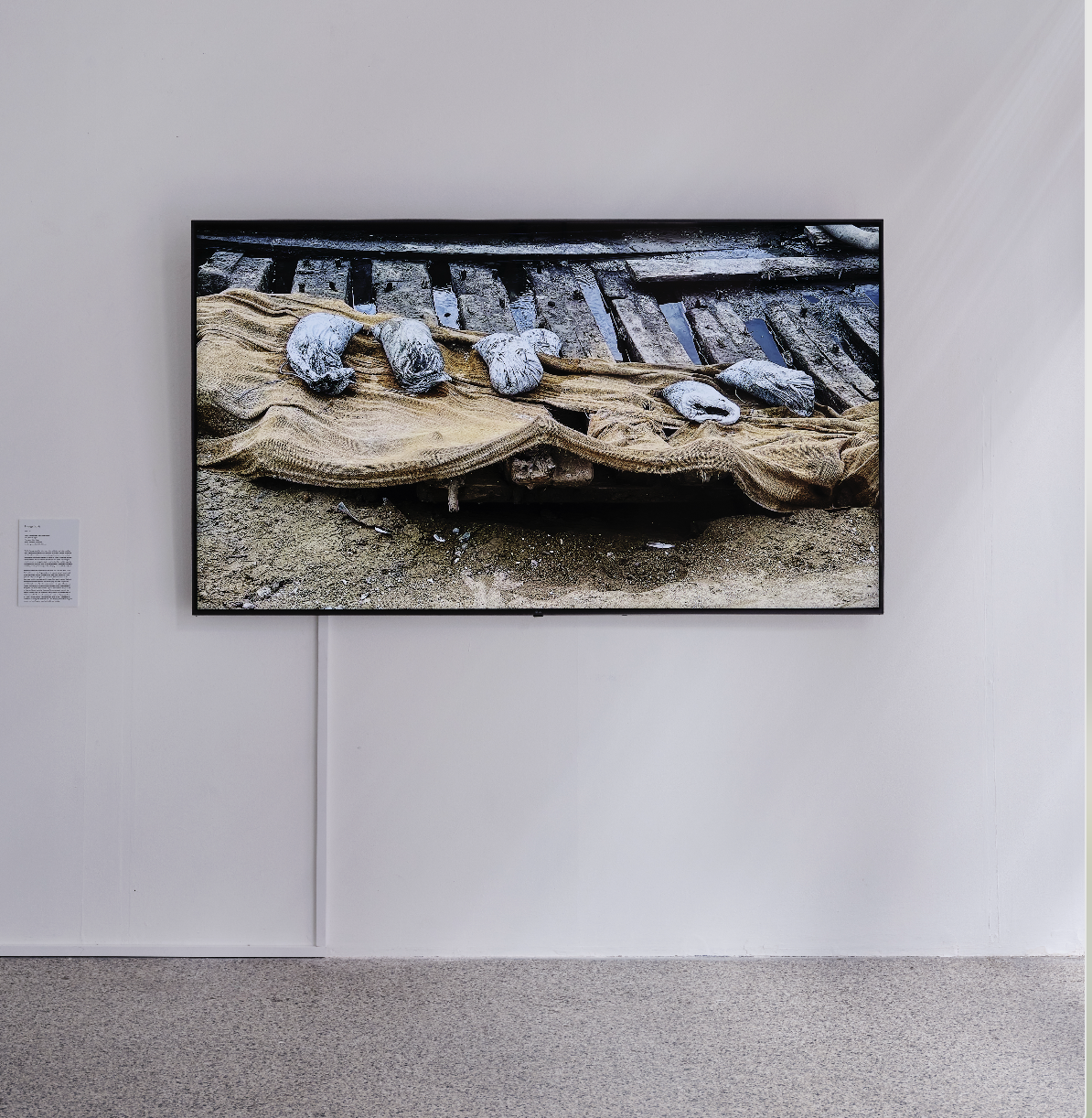
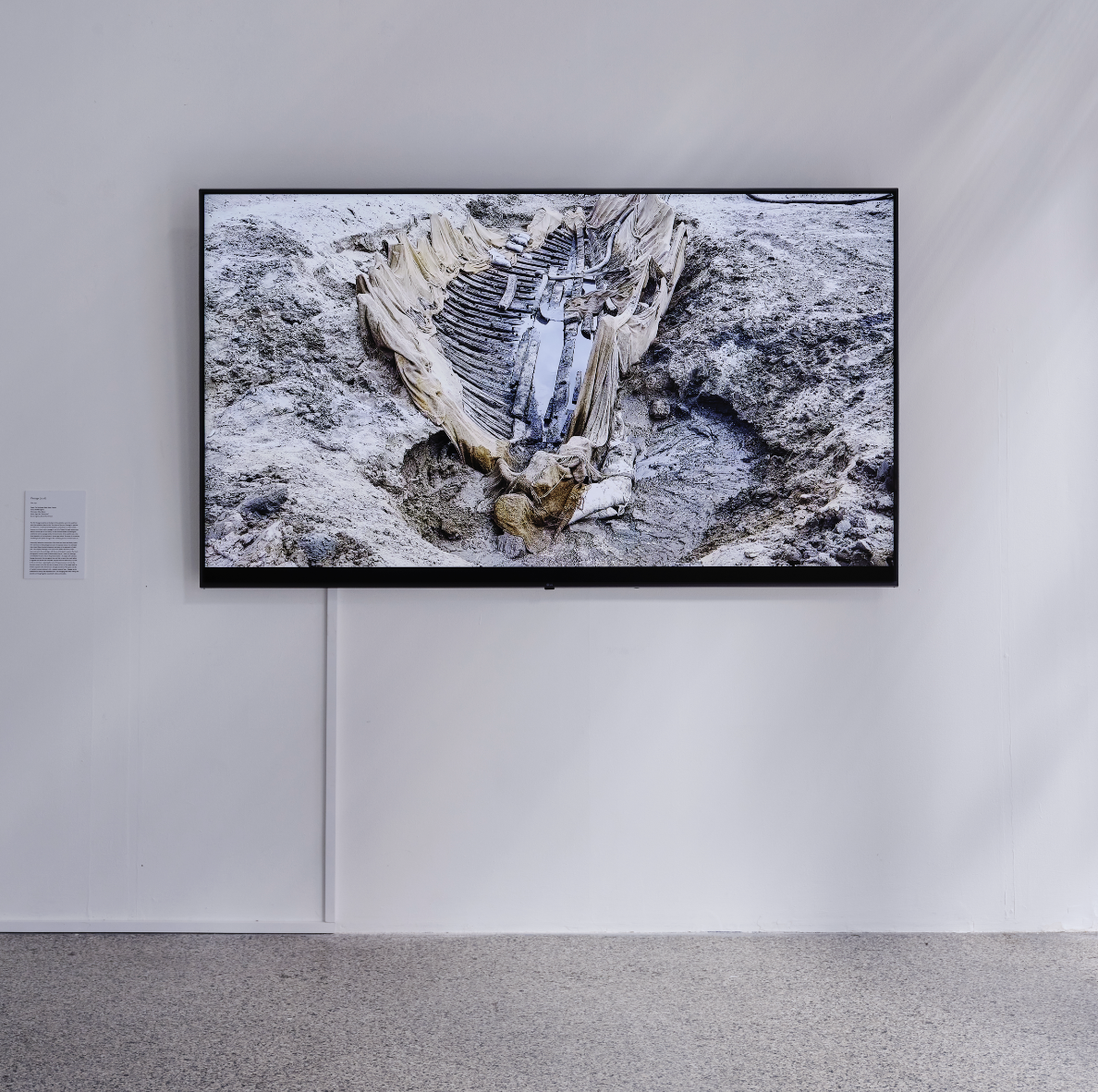
Passage (2026), 6:40 Film stills
Poem: The Parchment Boat — Moya Cannon, Music: Sigor Ros, Voice: Markéta Irglová, Filmmaker: Kilian Waters, Sound Engineer: Sturla Mio Þórisson
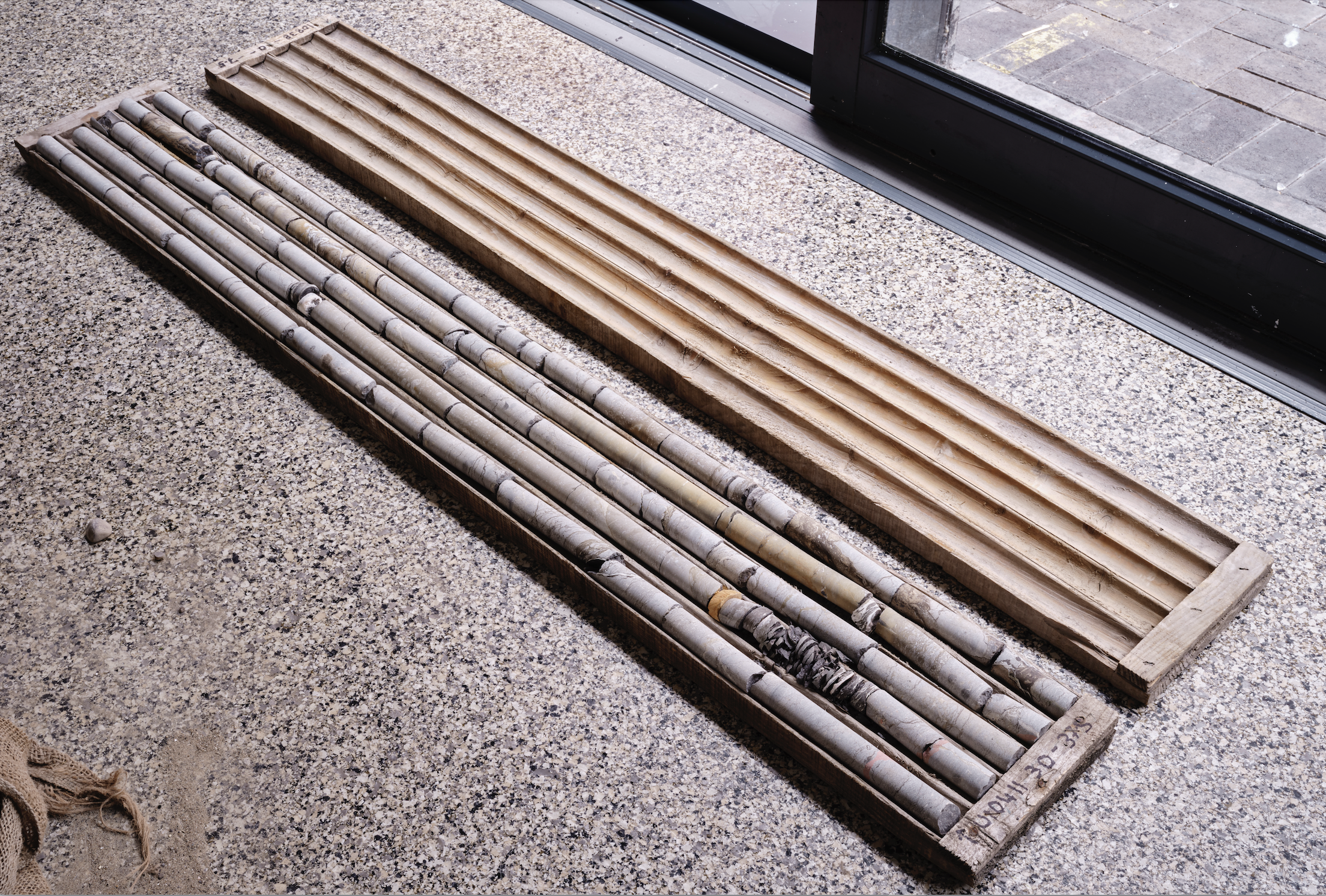
Core (2026), 350 million year old Irish limestone deposited in a shallow marine setting, Sculpted plank of wood and limestone, 160 × 23 cm, Siobhan McDonald, Installation view: The Lab, Dublin, 2026, Photo: Ros Kavanagh
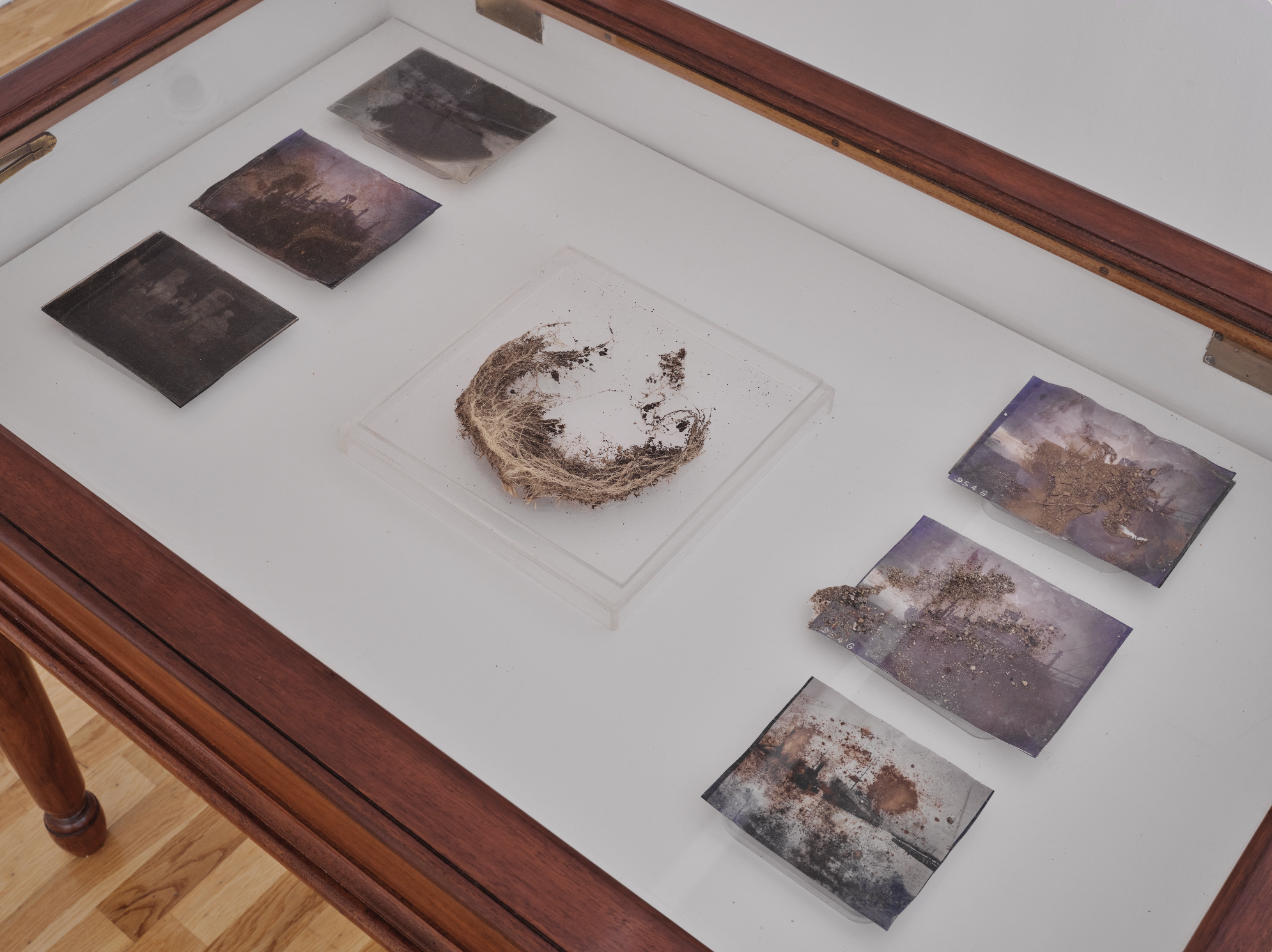
19th Century cabinet, collage on archival glass plates (Dublin Port), soil, bronze shavings.
A root looking for the sun, Roots, peat and quartz, Photo: Ros Kavanagh
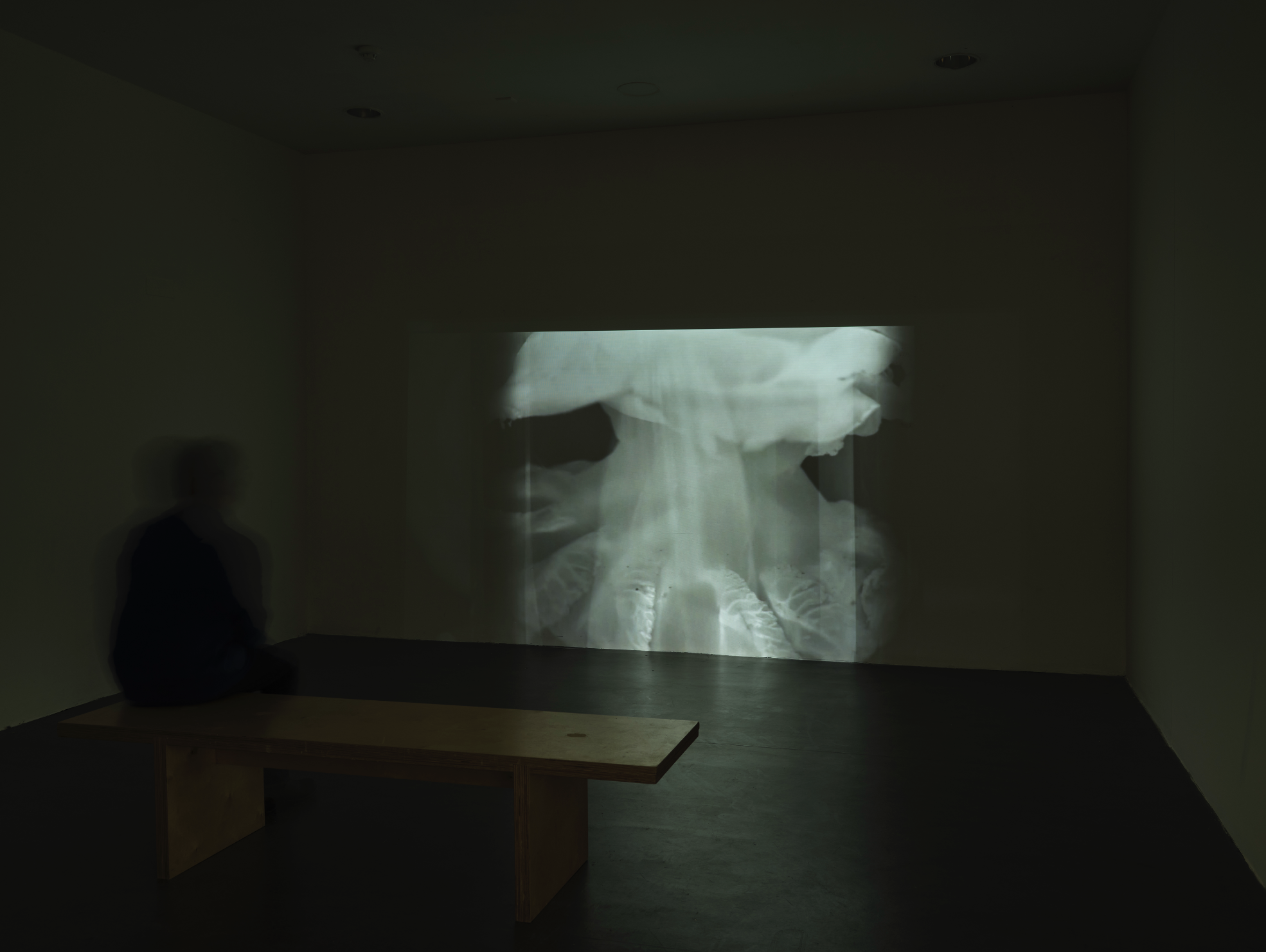
Floating Body, Biennale des Arts et de l’Océan, curated by TBA21 at Villa Arson, Nice (2025)
A slice of non-human time was filmed at the National Museum of Ireland in 2025, where 19th-century fish specimens from Dublin’s wetlands, preserved in formaldehyde, are suspended as markers of arrested movement and memory. Through these interwoven sites, the project traces memory, transformation, and more-than-human histories. Installation view: The Lab, Dublin, 2026
Photo: Ros Kavanagh